Sairai Sanya Arts Festival
Minami Senju (formerly “Sanya”), Tokyo
2022/10/22 – 10/23
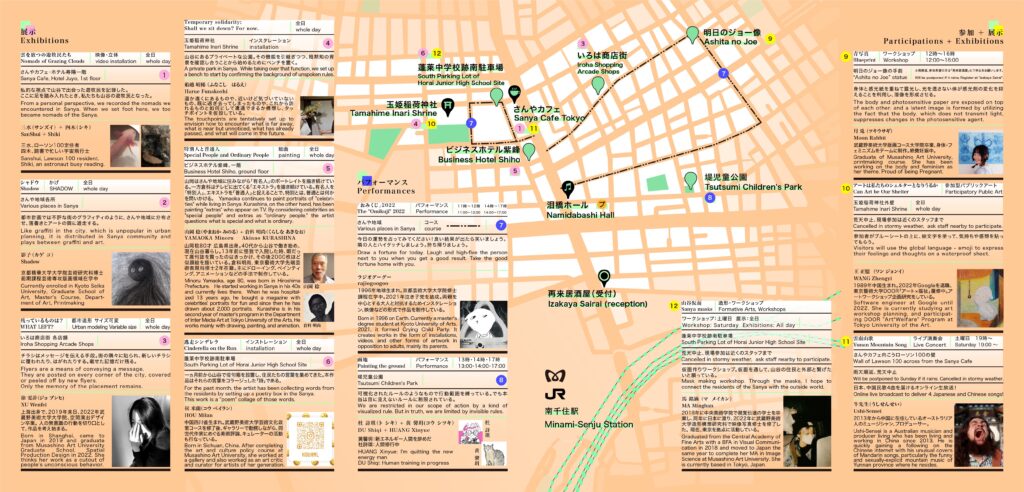
The Minamisenju area of Tokyo was named “Sanya” until 1966, where today the vast majority of Japanese don’t want to visit. Known as “doya” street, it is home to a large concentration of cheap, temporary dormitories for immigrant workers who worked as day laborers when Tokyo was under fast development in the past decades. The neighborhood is not as lively as China’s urban villages or as intimidating as the homeless areas of America’s Skid Row. The vividness has faded out and people have all aged out in this neighborhood, with 90% male population. Its gentrification has gradually started and now mixed with a low-vitality vibe and occasional aggressiveness.
On one side of the park in the center of the block is the private domain of the homeless who have pitched tents as homes. On the other side is a well-known shrine, said to be a god that blesses studying for exams, and there are many student families who come from far away to worship it. The walls of the shrine are simple wavy pieces of iron.
I wanted to create a piece of work that belonged to this place, from the process, to the result. I also wanted it to be grassroots and barrier-free, so that some kind of communication could happen between outsiders and residents.
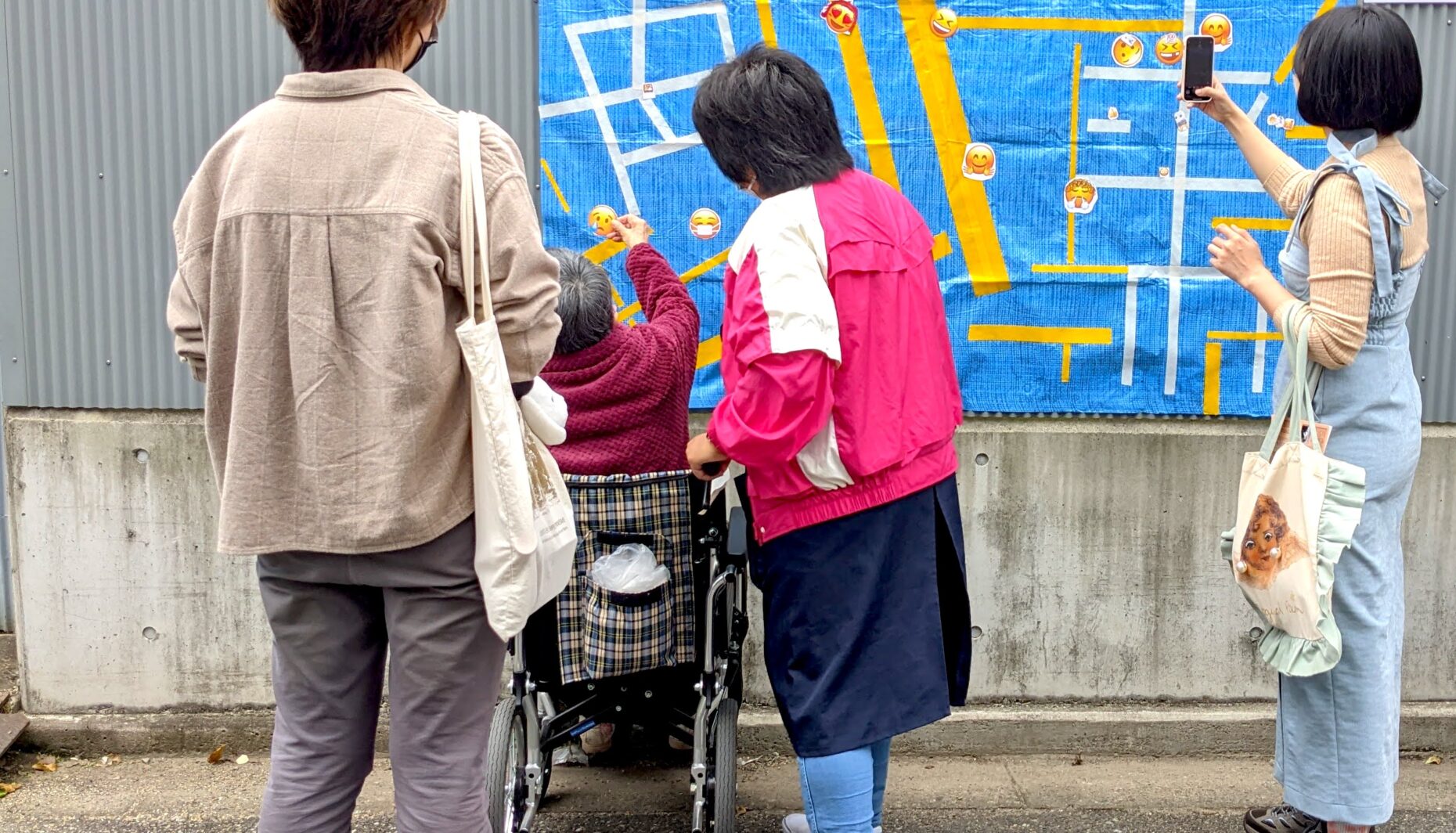
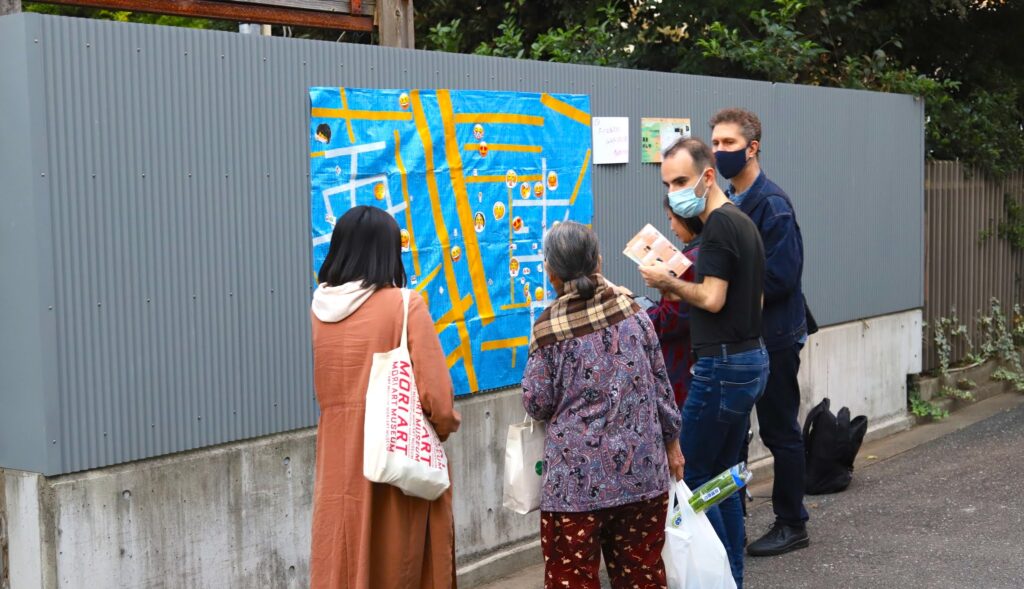
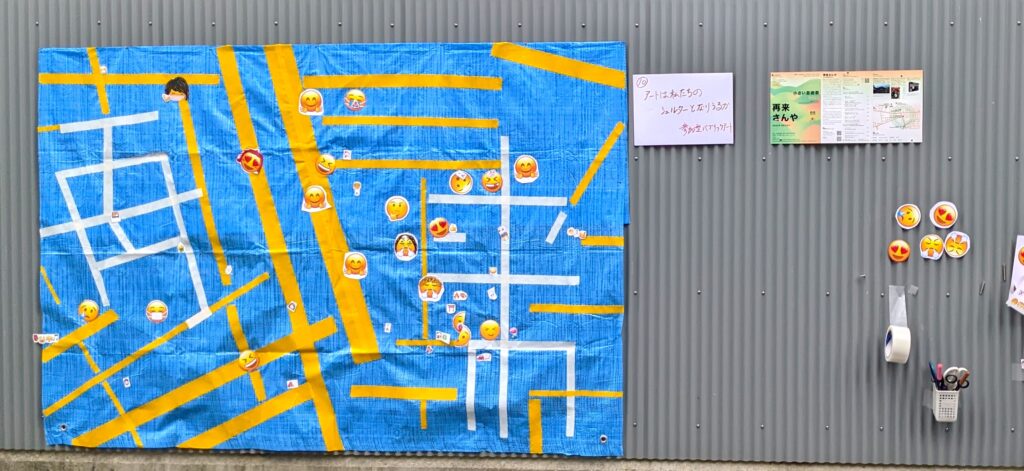
I utilized what there is from the place and made use of the local iron sheet wall of the shrine. I stuck cheap blue tarpaulin onto the iron wall. It is the favorite items of the locals that they use as a daily basis, to sit on or to cover their belongings.
The streets in the map that I initially depicted with tape on the tarpaulin were fragmented and broken. Symbolizing the fractured nature of the city’s different classes and people. The contrast between this “doya” neighborhood to the south of Minami-Senju Station and the bustling shopping mall and news built residential area to the north is striking. There is an insurmountable barrier between the people who live a block away from each other in the city.
I invite people who walk by to use the emoji magnet stickers I provided to connect the paths on the map. When someone is willing to participate, they can choose to express their thoughts or mood with emoji stickers and put on to the tarpaulin map. One can choose to connect one path, and there are some paths with large intervals that require many people to connect. If enough people participate, even unconsciously, the streets will be connected. And each of these expressions that appear on the street is a common language that needs no explanation, but can also serve as an invitation to just ask a person why they choose that emoji.
Thus the streets of the “Sanya”, depicted by the artist (me), passers-by and locals together, and utilizing emoticons without language barriers, express the whole process of change in the interaction between people and places, between people and people. Observing the expressions left behind, faces of laughter or anger are often those of new-timers. The helpless, tired or contented ones are those who actually live here.
After the collaboration, I gave it to one of the locals in the park, hoping that he would treat it as a daily necessity and use it to protect himself from the wind and rain. At first I planned to sell the art to them but I got intimidated and said it is free, and one uncle happily accepted it.
During the interaction I have with the locals, I continue to have these questions in my heart: Do labor workers like them or homeless people need art? In what form is art needed by different groups of people? I would also like to pose the question: can art serve as a shelter for all human beings? I am bringing this query to my later practices.
山谷这片绝大多数日本人不愿意涉足的地区,集中了大量廉价零时住宿,是在东京做日工的低收入人群聚集地。这片街区并不像中国的城中村那么热闹市井,也不像美国城市中心流浪汉聚集地那样令人生畏。曾经的不良少年也好破产中年也好都已经老去,更多的是一种寂寞的气氛和偶尔的怪脾气。
街区中心的公园,一边是搭满了帐篷的流浪汉的私人领地。另一边是一个小有名气的神社,据说是保佑学习考试的神,还有不少远道而来参拜的日本人。神社的围墙是简易的波浪形铁片。
我希望创造一件属于这个地方的作品,从过程,到结果。也希望是草根的,无障碍的,能让外来人和住民有某种交流的发生。于是因地取材取景,利用铁片墙面和自制磁铁贴来做公共艺术的拼贴。低收入人群甚至流浪者需要艺术吗?艺术品是以什么样的形式被不同人群需要呢?我也想提出一个问题:艺术能作为人的避难所吗?
便宜的蓝色防水布,和方便用手撕的胶带是当地常见的大叔们的爱用品。所以我在作品中使用防水布和胶带作为主要材料,结束后送给了山谷的大爷,希望他当成日常必需品,用它来遮风挡雨。企图将画布卖给当地居民又是一种社会实践。
我最初在防水布上用胶带描绘的山谷街道是零散的,断裂的。象征城市不同阶级,人群的分断。南千住车站的南边是山谷,北边是热闹的商场居民区,形成了鲜明的对比。城市之中相隔一条街的人却是有无法逾越的障碍。
当有人愿意参与进来的时候,他/她就可以选择用颜文字表达自己的观后感,或者仅仅是自己心情,然后在任何地方把自己的贴纸放上去。可以选择去连接一条路,有一些路的间隔很大需要很多人才能连上。如果有足够多人参加,即使是无意识的参加,街道就会被联接起来。而这每一个在街道上出现的表情是不需解释的共同的语言,也是是情绪情感的相互作用。
于是异邦人艺术家(我),路人和当地人一同描绘的山谷街道,并运用无语言障碍的表情符号,表现人和地域,人和人的互动关系变化的整个过程。观察那些参与留下表情的符号,狂喜和愤怒的脸往往是初来乍到者。无奈,疲倦或满足的是真正生活在这里的人。
東京の南千住にある「山谷(さんや)」エリアは、1966年までその名で呼ばれ、現在でも多くの日本人が足を踏み入れるのをためらう場所です。「ドヤ街」として知られ、高度経済成長期に日雇い労働者として東京の開発を支えた人々のための安宿が集中しています。中国の「城中村」ほど活気や市井の賑わいはなく、アメリカのスキッド・ロウ(ホームレス街)ほど威圧感があるわけでもありません。かつての不良や破産した中年たちも今や年老い、街全体の活気は失われ、住民の9割を男性が占めています。ジェントリフィケーションが徐々に進む中、街には寂寥感と、時折見せる特有の気難しさが混在しています。
街の中心にある公園の片側は、テントを張って暮らすホームレスの人々のプライベートな領域です。もう一方には、受験の神様として知られる有名な神社があり、遠方から参拝に訪れる家族連れや学生の姿も多く見られます。神社の外壁は、簡素な波型のトタン板でできています。
私は、制作過程から結果に至るまで、完全に「この場所」に属する作品を創りたいと考えました。同時に、草の根的でバリアフリーであり、よそ者と地元住民との間に何らかのコミュニケーションが生まれることを願っていました。
そこで、その場にある環境を活かし、神社のトタン壁を利用して公共芸術のコラージュを行いました。安いブルーシートや手でちぎれるテープは、地元のおじさんたちが日常的に座ったり荷物を覆ったりするのに愛用している身近な素材です。
私が最初にブルーシートの上にテープで描いた山谷の街道(地図)は、断片的で途切れていました。これは、都市における異なる階級や人々の分断を象徴しています。南千住駅の南側に広がるこのドヤ街と、北側の賑やかなショッピングモールや新興住宅街とのコントラストは鮮烈です。たった一本の道を隔てて暮らす人々の間には、到底乗り越えられない障壁が存在しているのです。
道行く人々には、私が用意した顔文字(絵文字)のマグネットステッカーを使って、地図上の道を繋ぐよう呼びかけました。参加してくれる人は、自分の感想やその時の気分を顔文字で表現し、好きな場所にステッカーを置くことができます。一つの道を繋ぐこともできれば、間隔が広く多くの人の協力が必要な道もあります。無意識であっても、十分な数の人が参加すれば、途切れた街道は繋がっていきます。街道に現れたこれらの表情は、説明不要の共通言語であり、感情の相互作用でもあります。
こうして、異邦人であるアーティスト(私)、通行人、そして地元住民が共に描き出した山谷の街道は、言語の壁を越えた顔文字を通じて、人と地域、人と人との関わりが変化していくプロセス全体を表現しています。残された表情を観察すると、狂喜や怒りの顔を置くのは往々にして新参者であり、一方で、どうしようもなさ、疲労、あるいは満ち足りた表情を置くのは、実際にここを生活の拠点としている人たちでした。
ワークショップの終了後、私はこの作品を公園にいた地元のおじさんの一人に譲りました。日常の必需品として、雨風をしのぐために使ってほしいと願って。当初はこのアート(キャンバス)を彼らに「売る」という社会実験も企てていましたが、いざとなると気後れしてしまい「無料です」と伝えたところ、おじさんは嬉しそうに受け取ってくれました。
地元住民との交流を通じて、私の心の中には常にいくつかの問いが巡り続けています。低所得の労働者やホームレスのような人々にアートは必要なのだろうか?異なる境遇の人々から、アートはどのような形で求められるのだろうか?最後に、私は一つの問いを投げかけたいと思います。
「アートは、すべての人間にとっての避難所(シェルター)になり得るのだろうか?」
私はこの探求を、今後の制作活動にも持ち続けていきます。